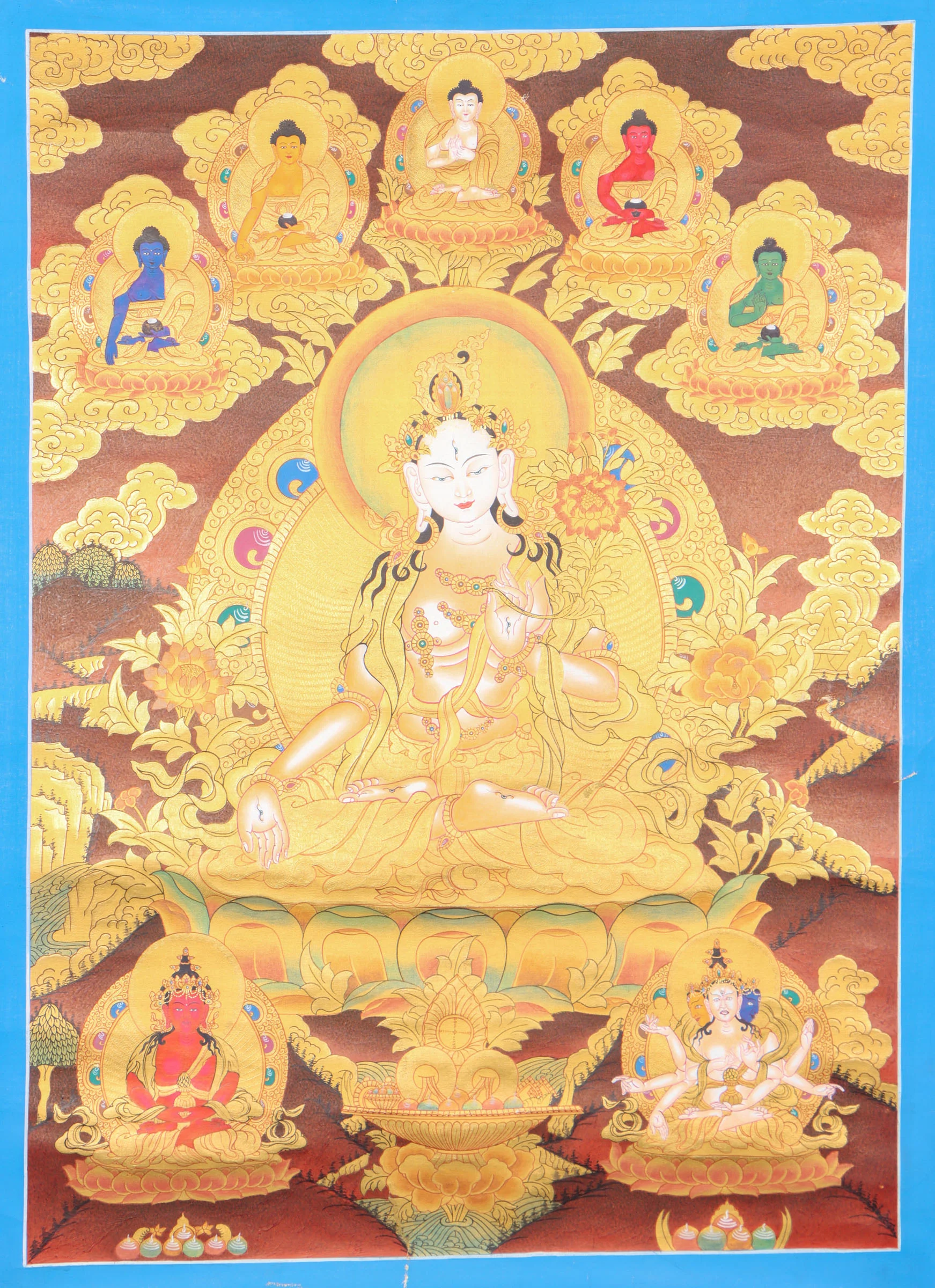
White Tara Thangka
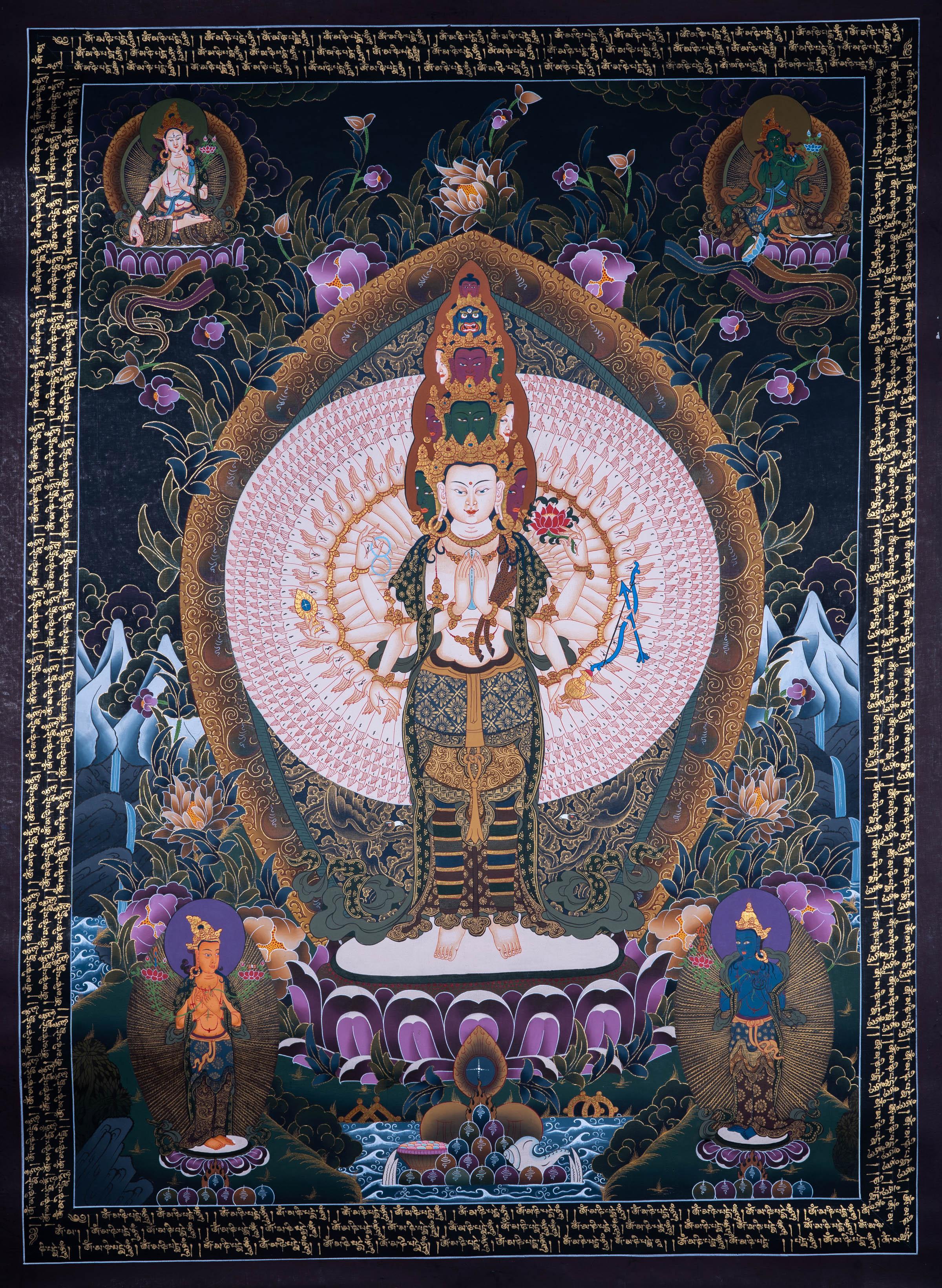
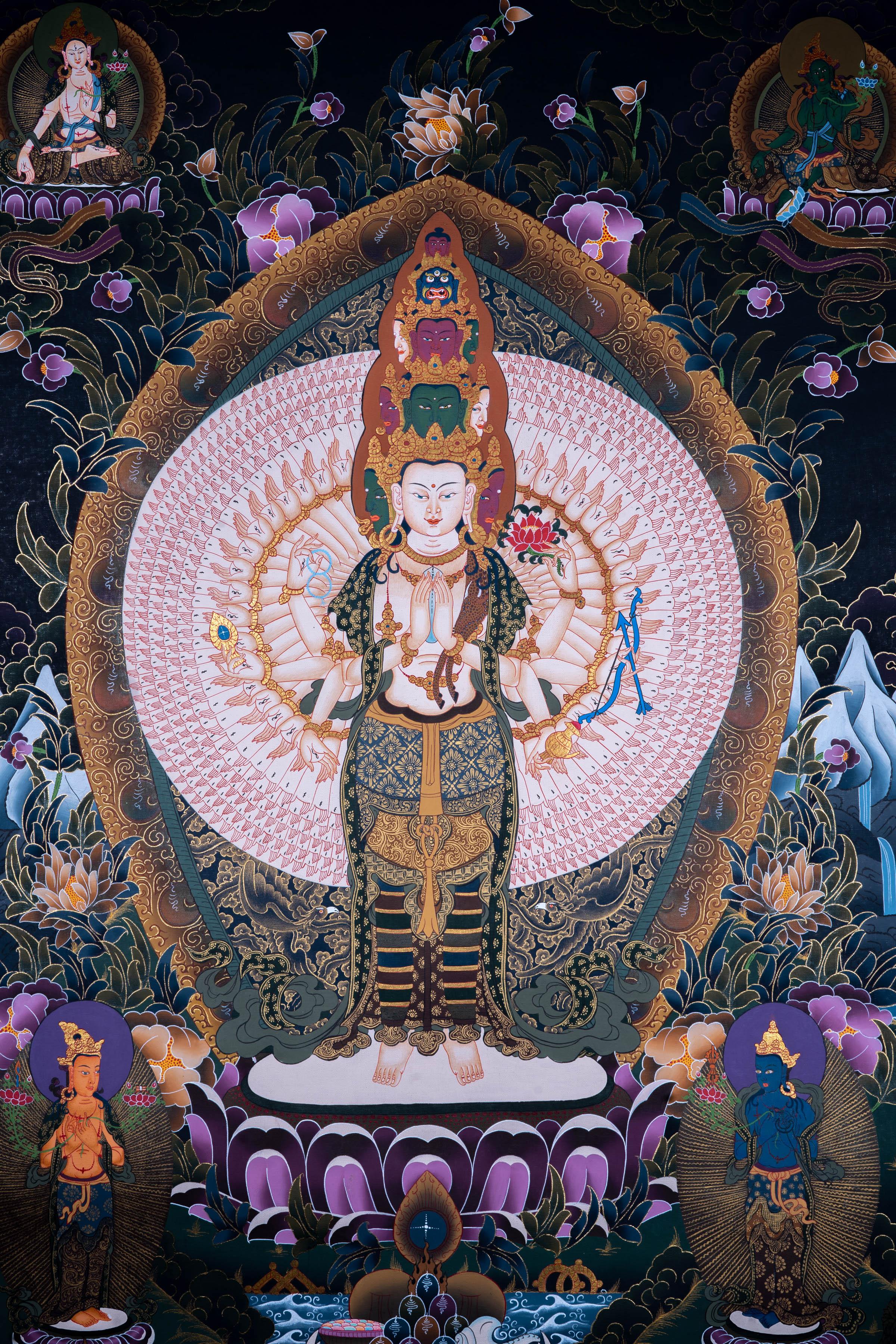
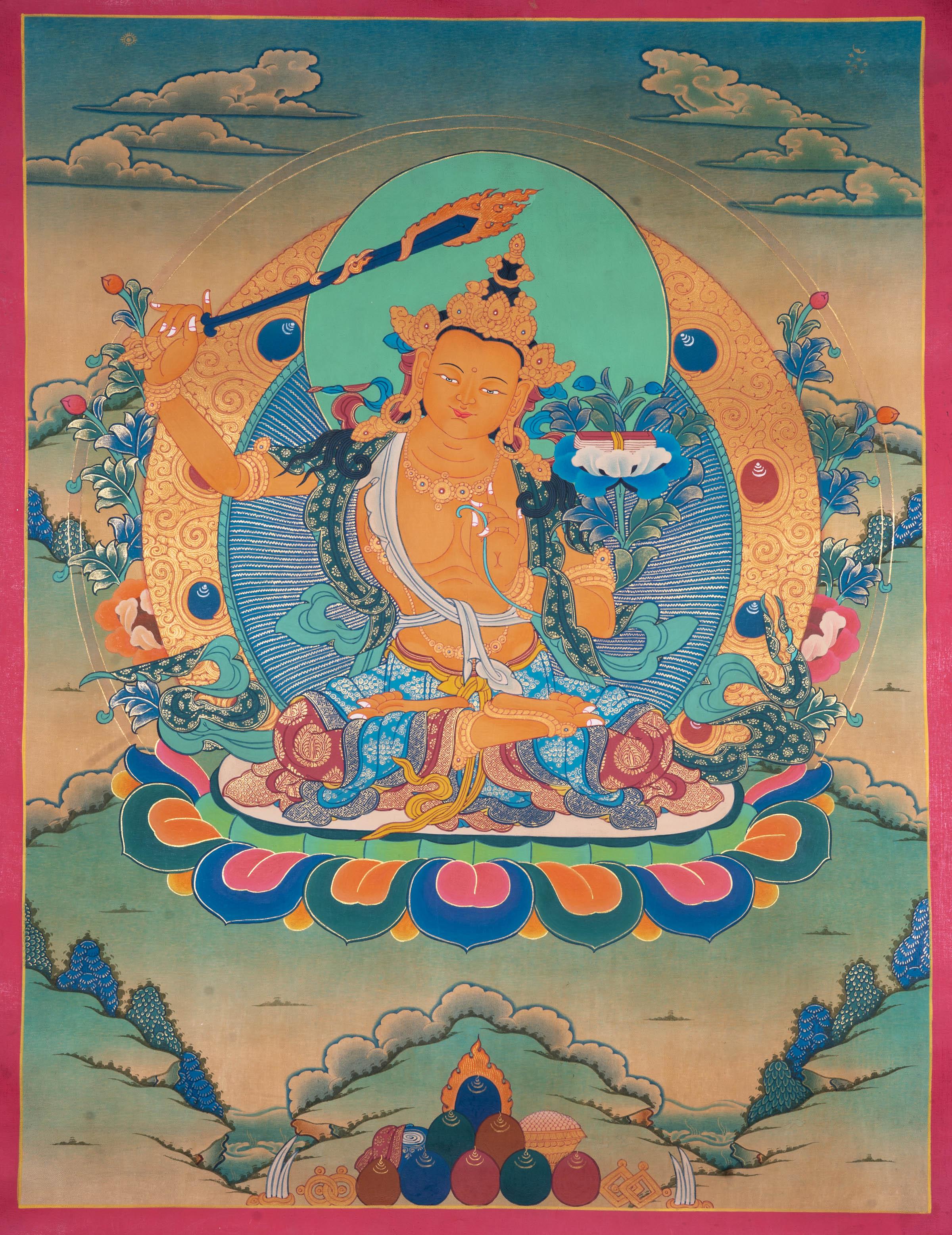
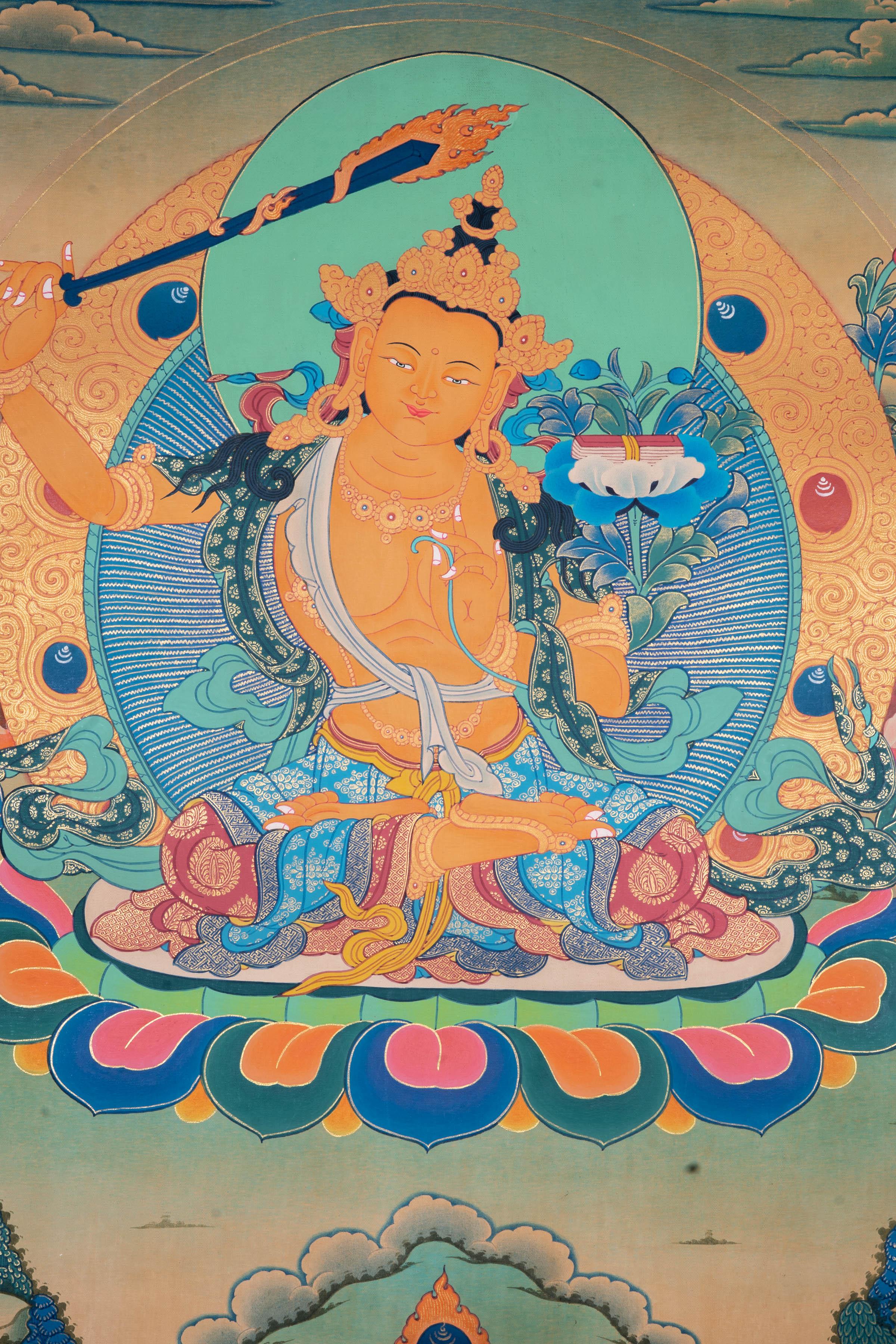
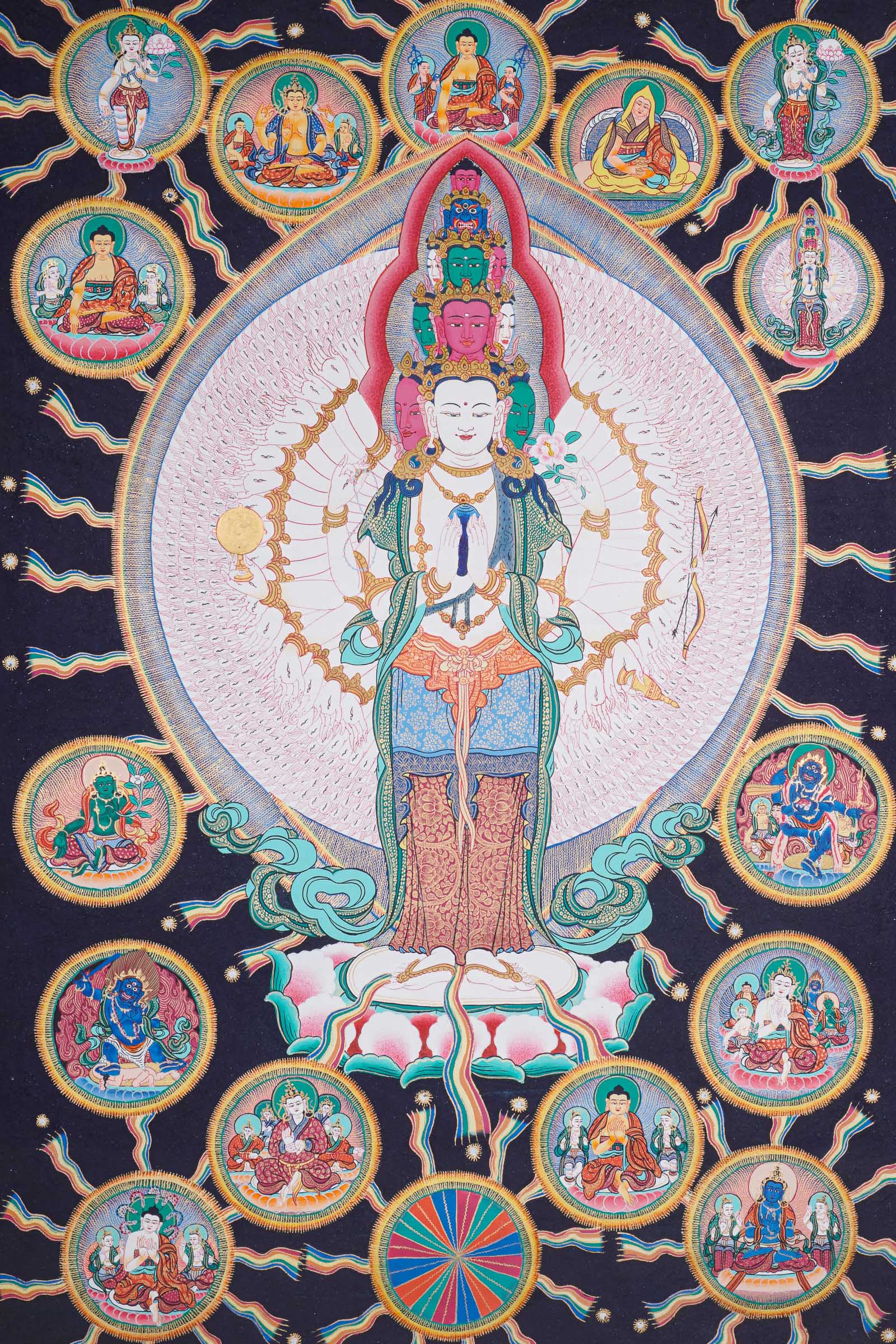
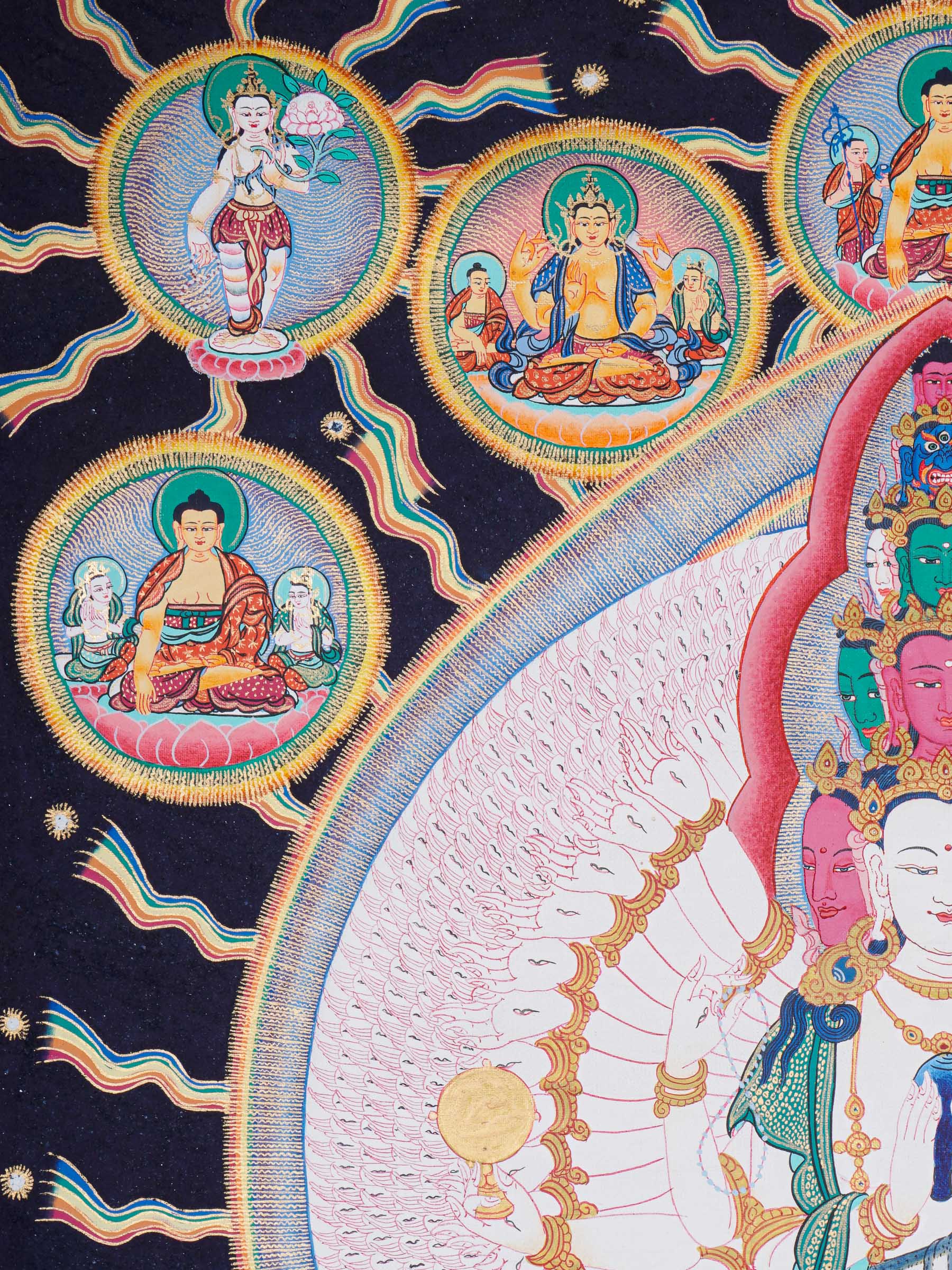
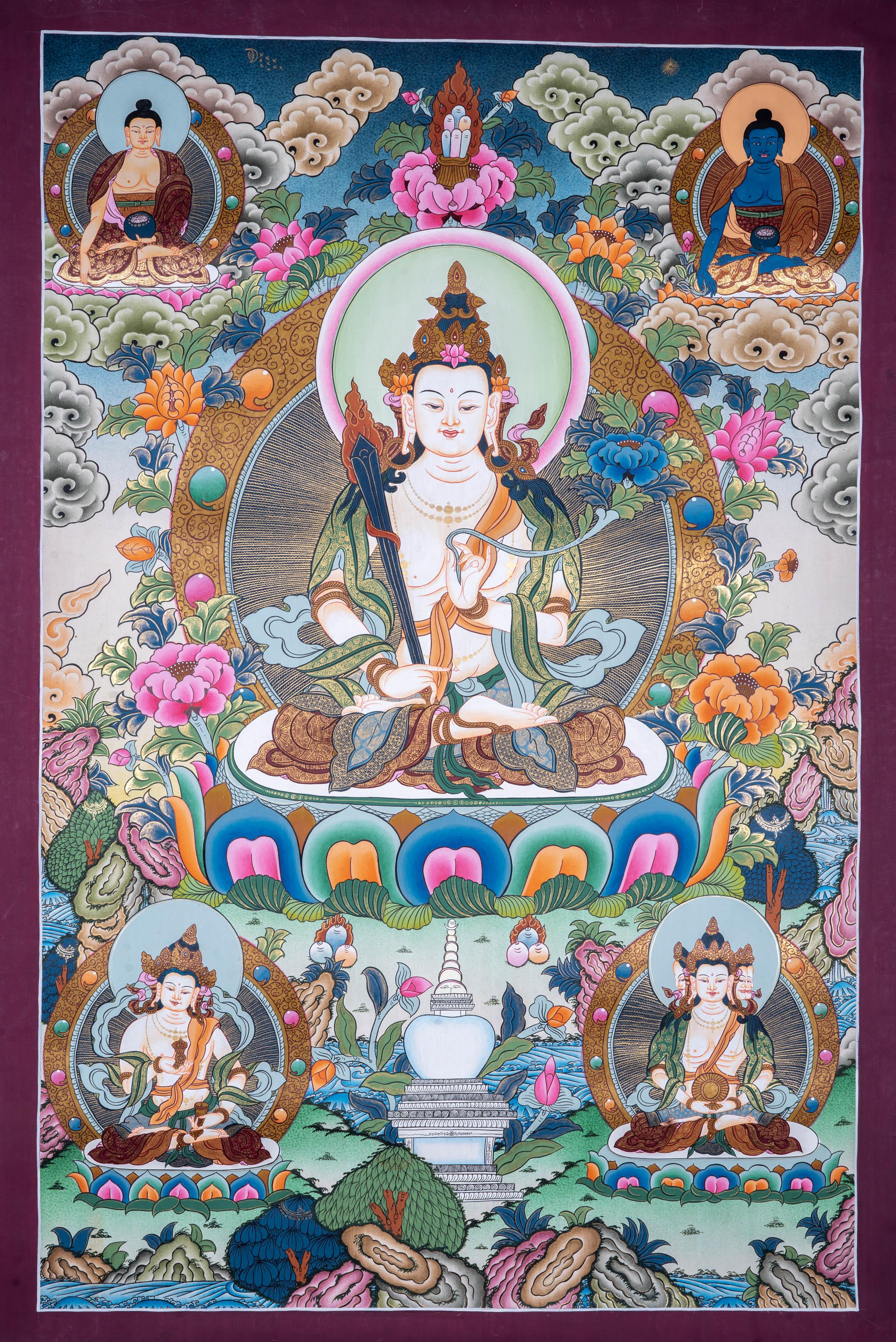
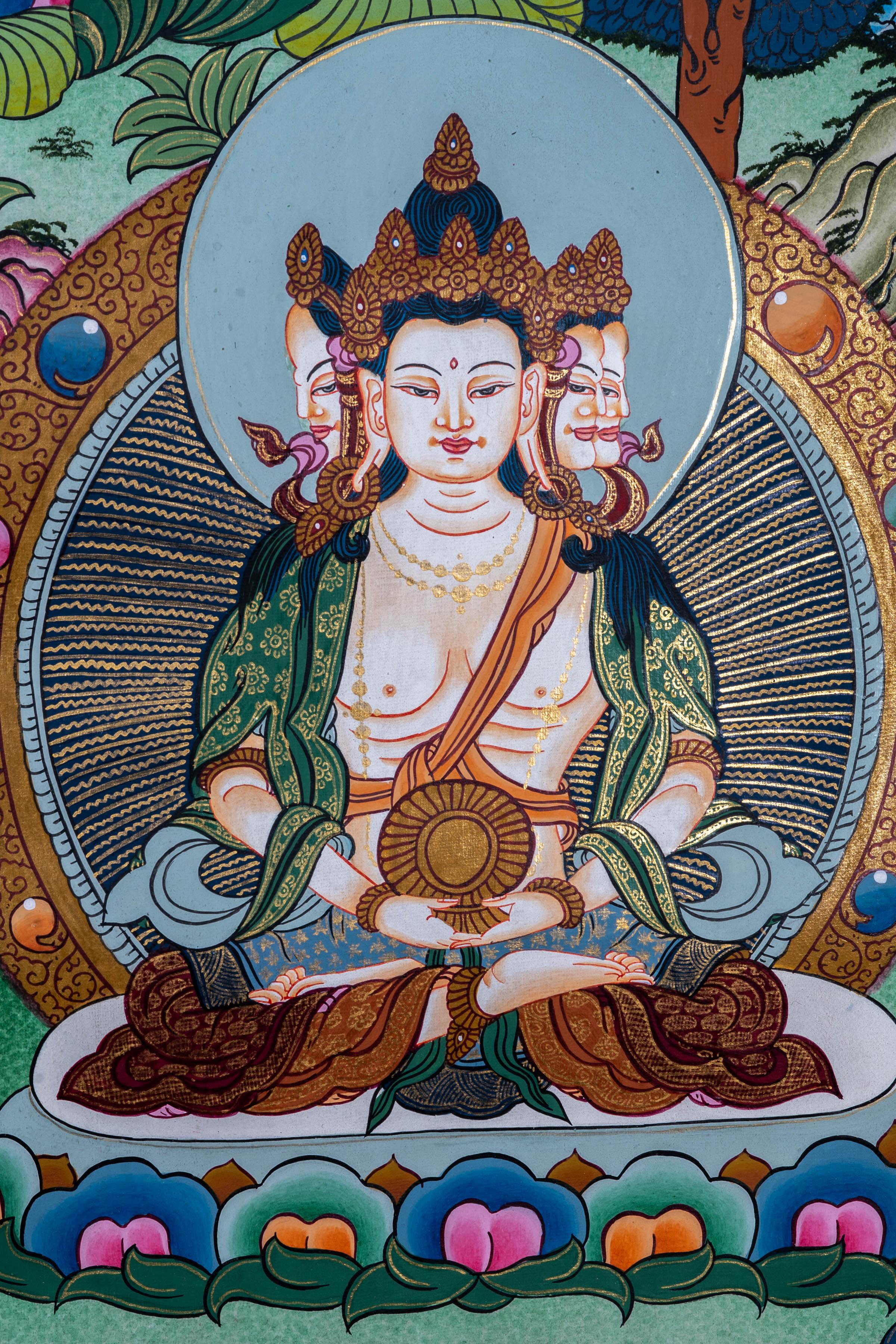
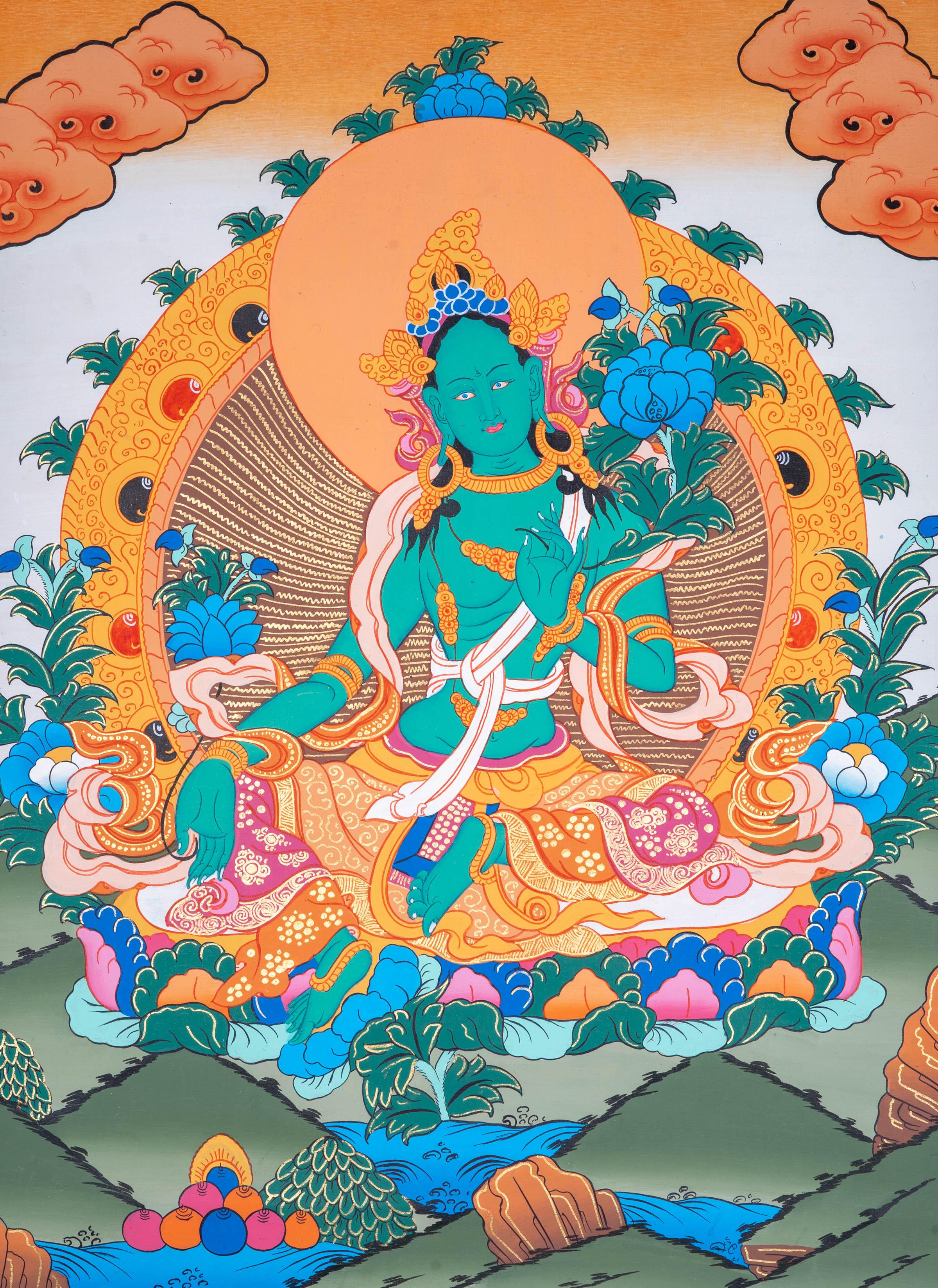
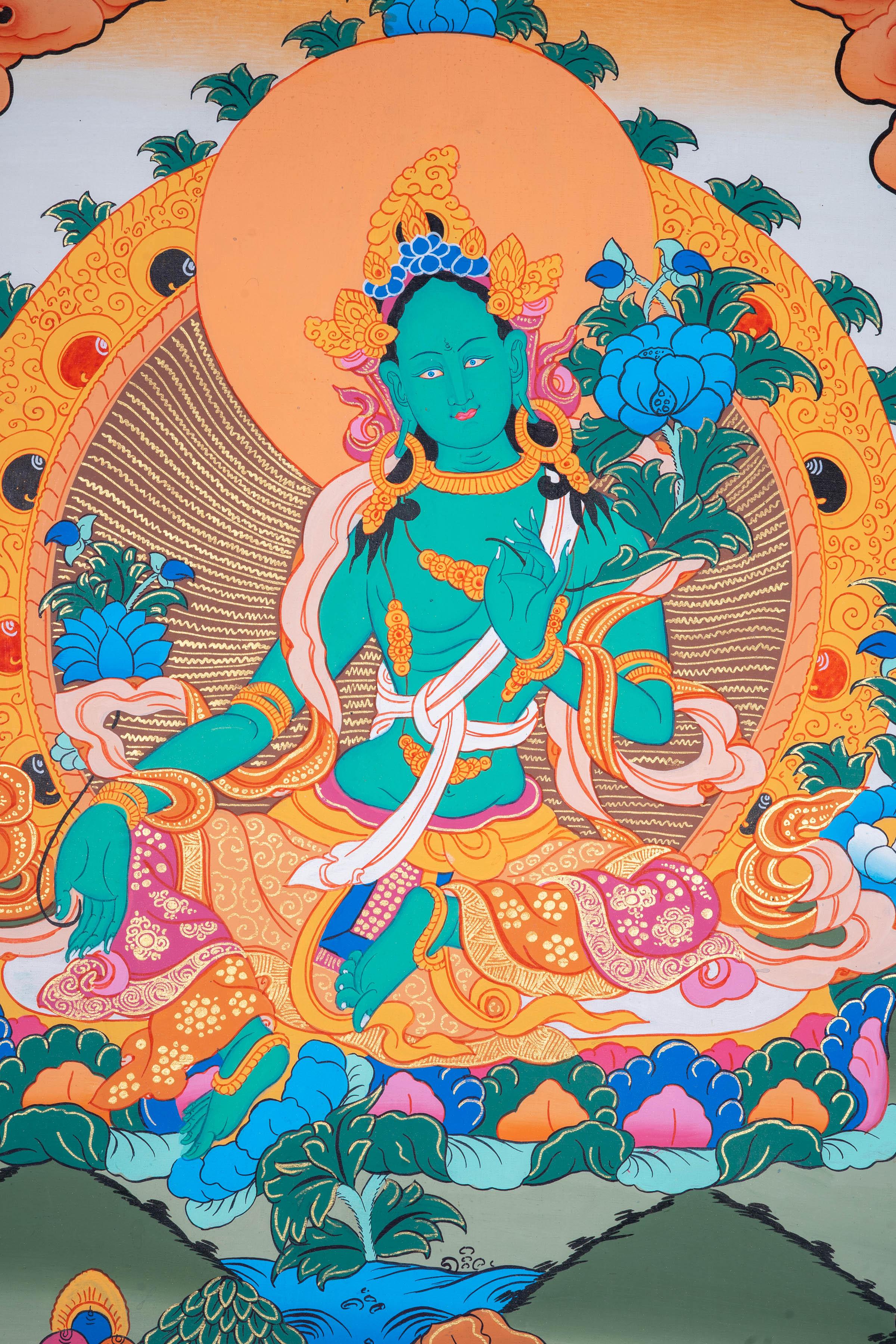
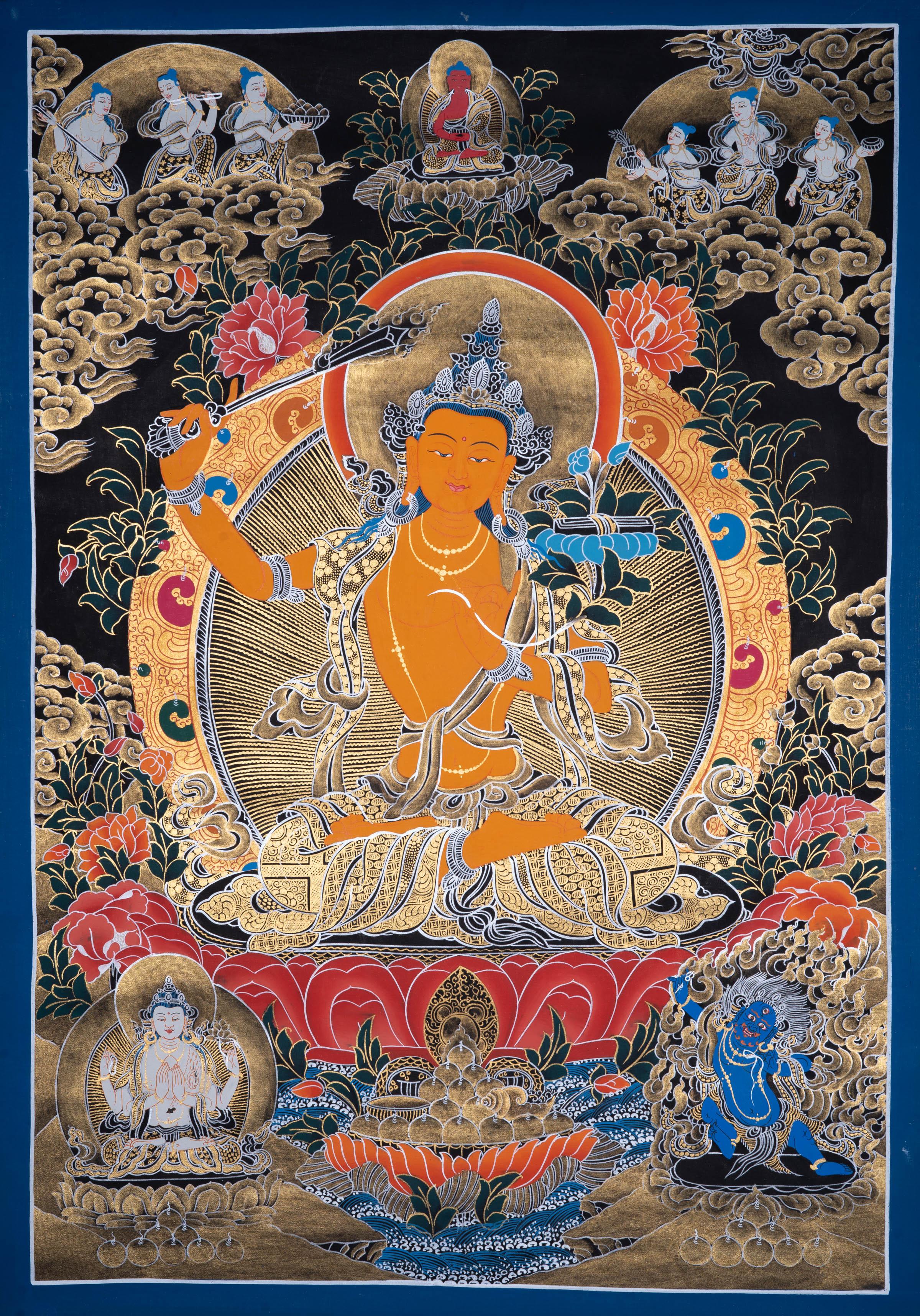
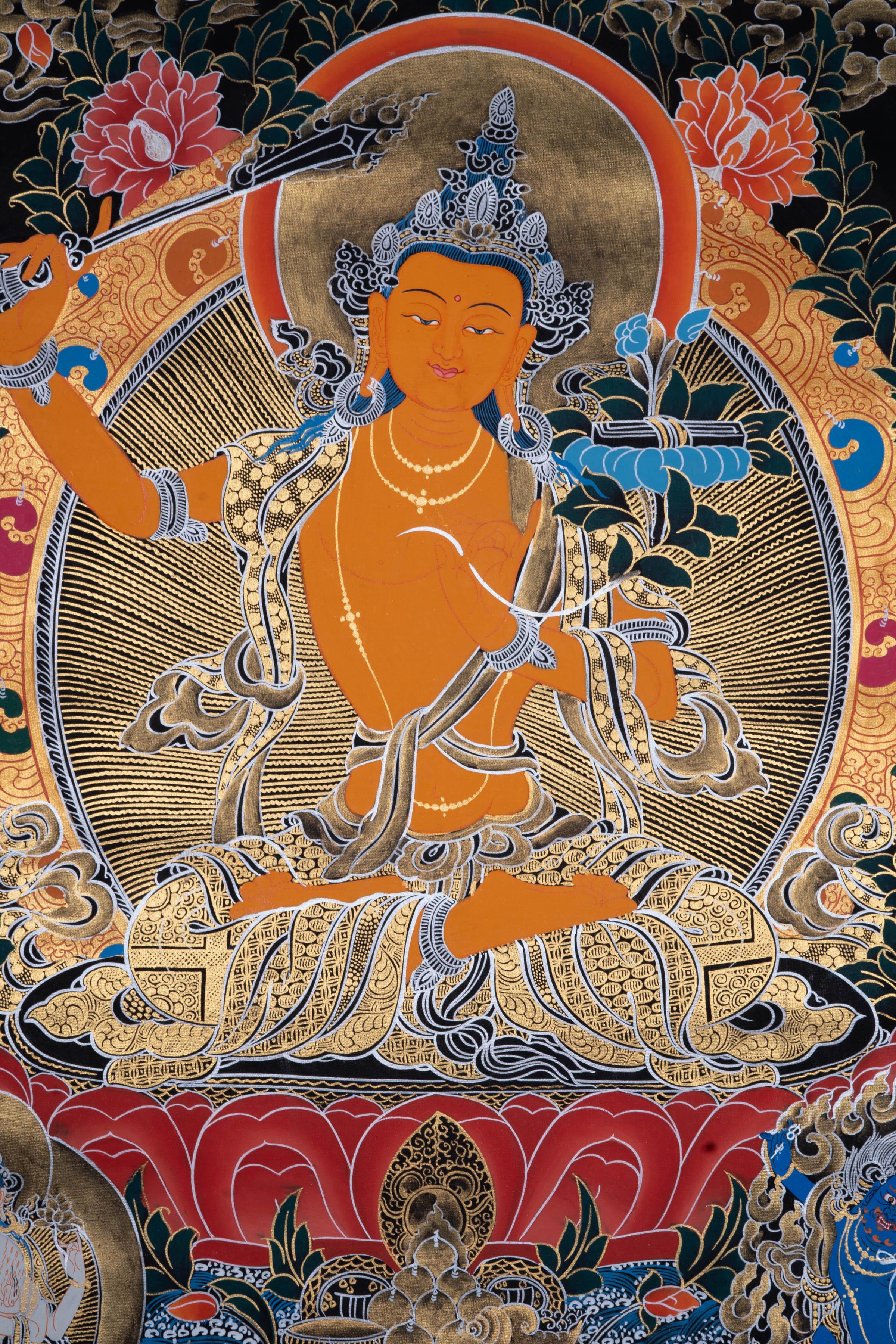
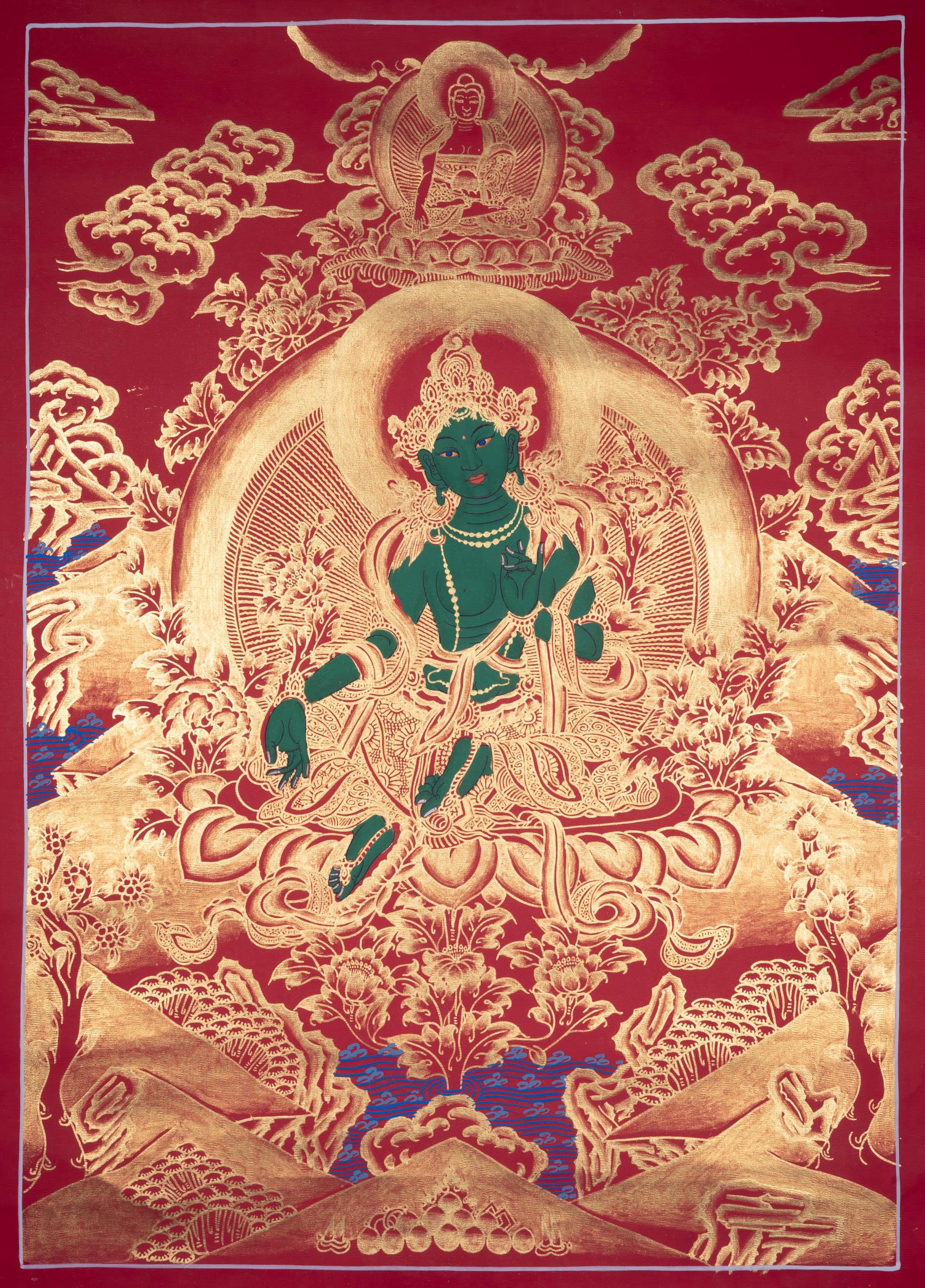
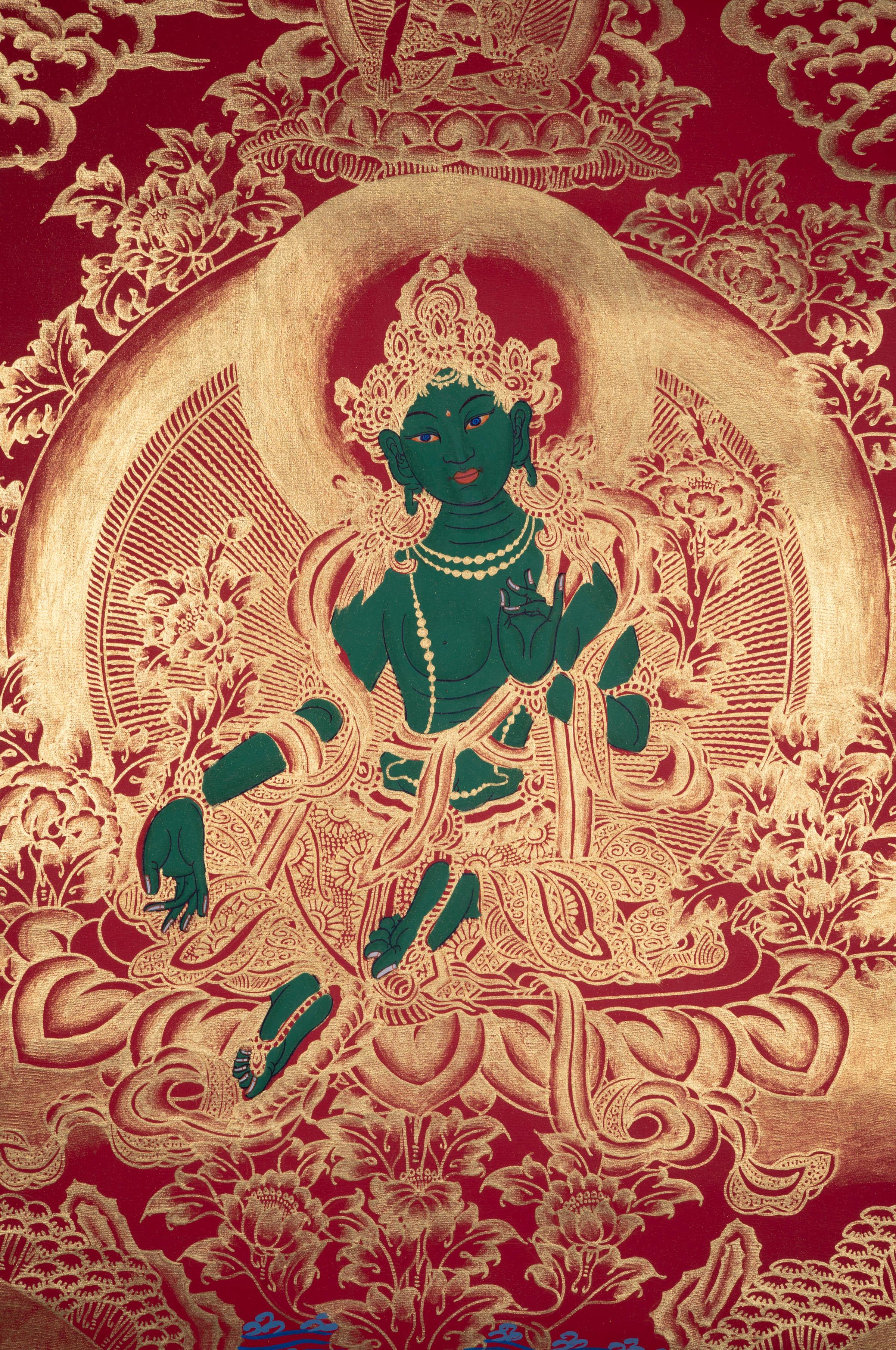
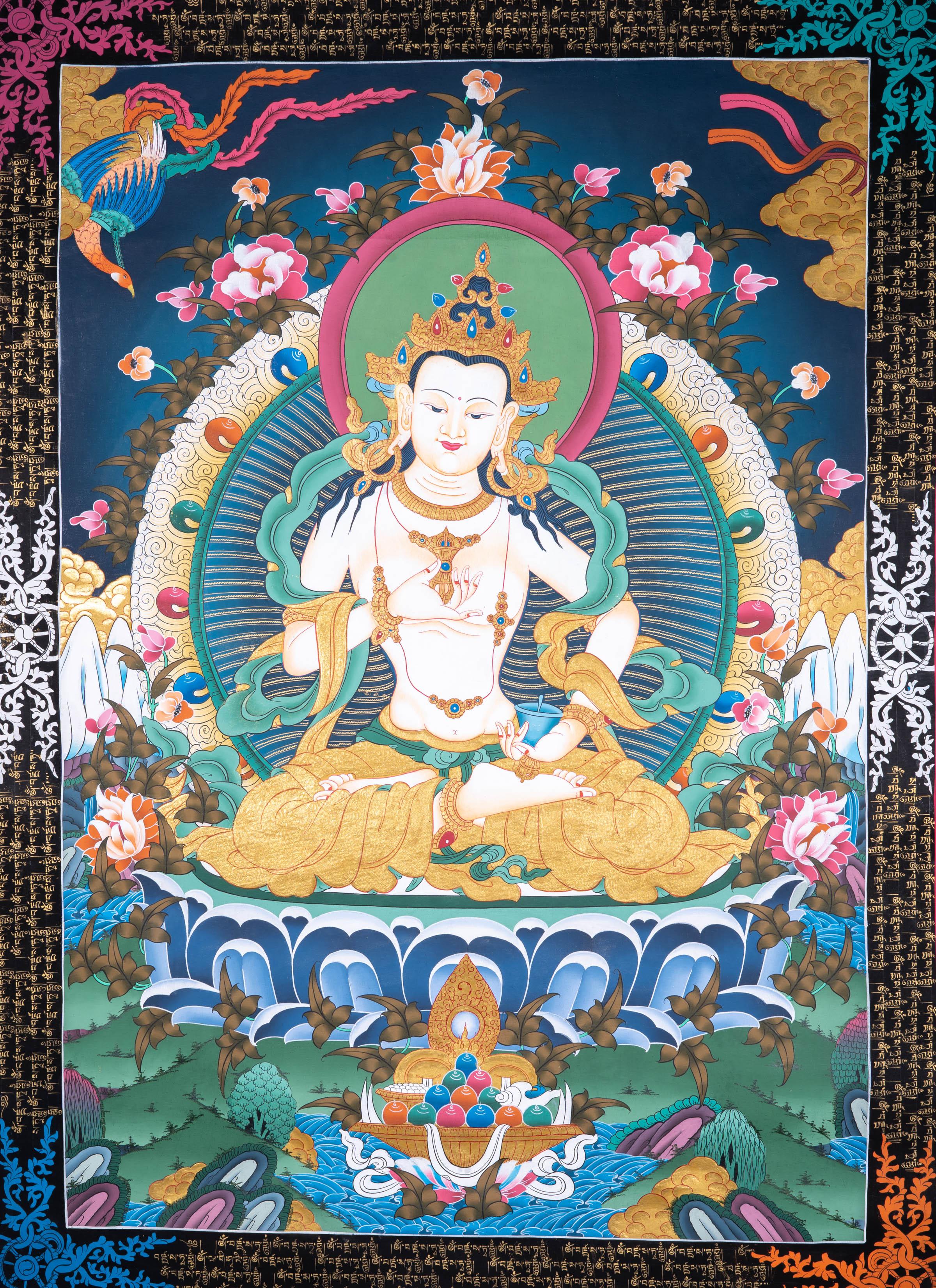
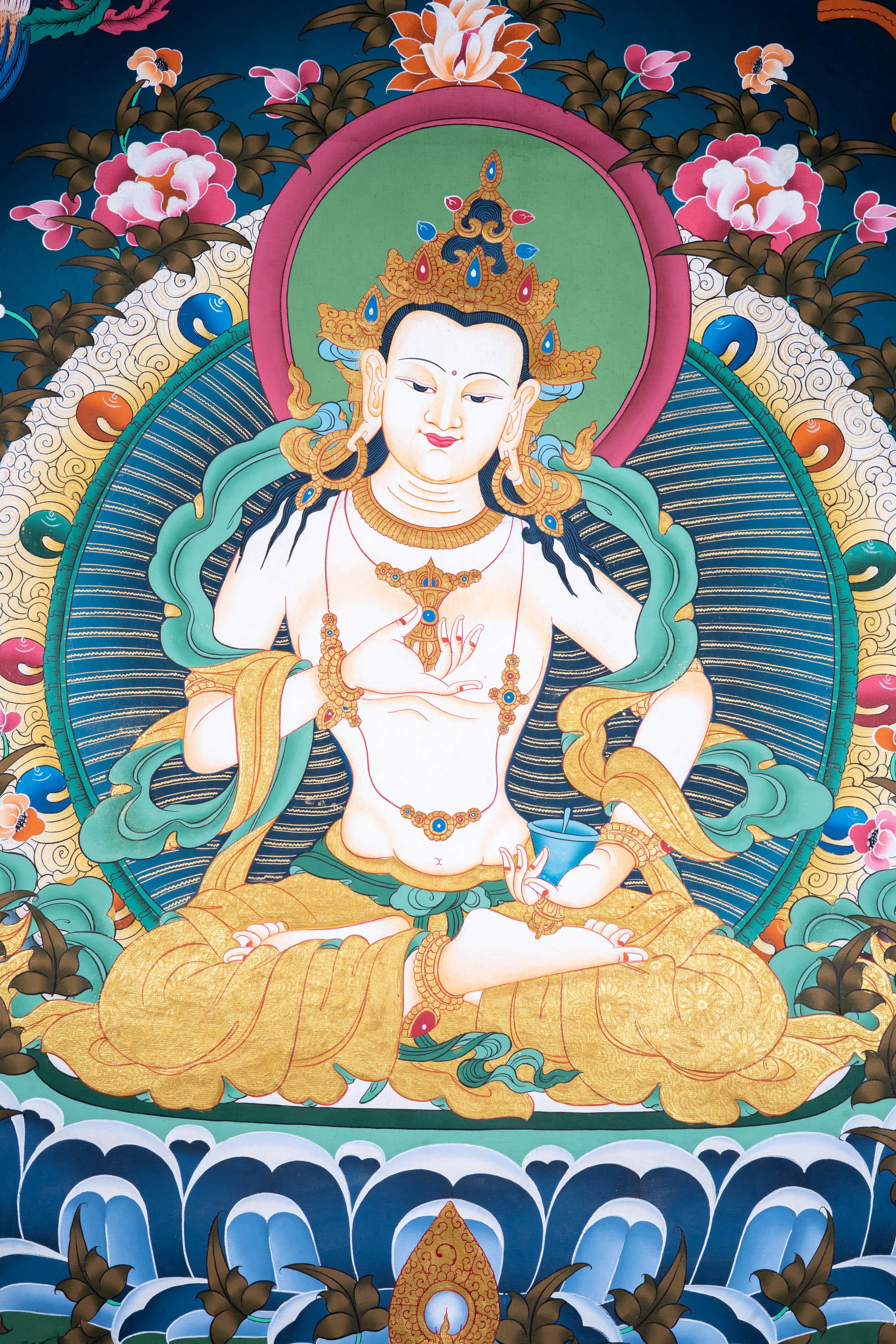
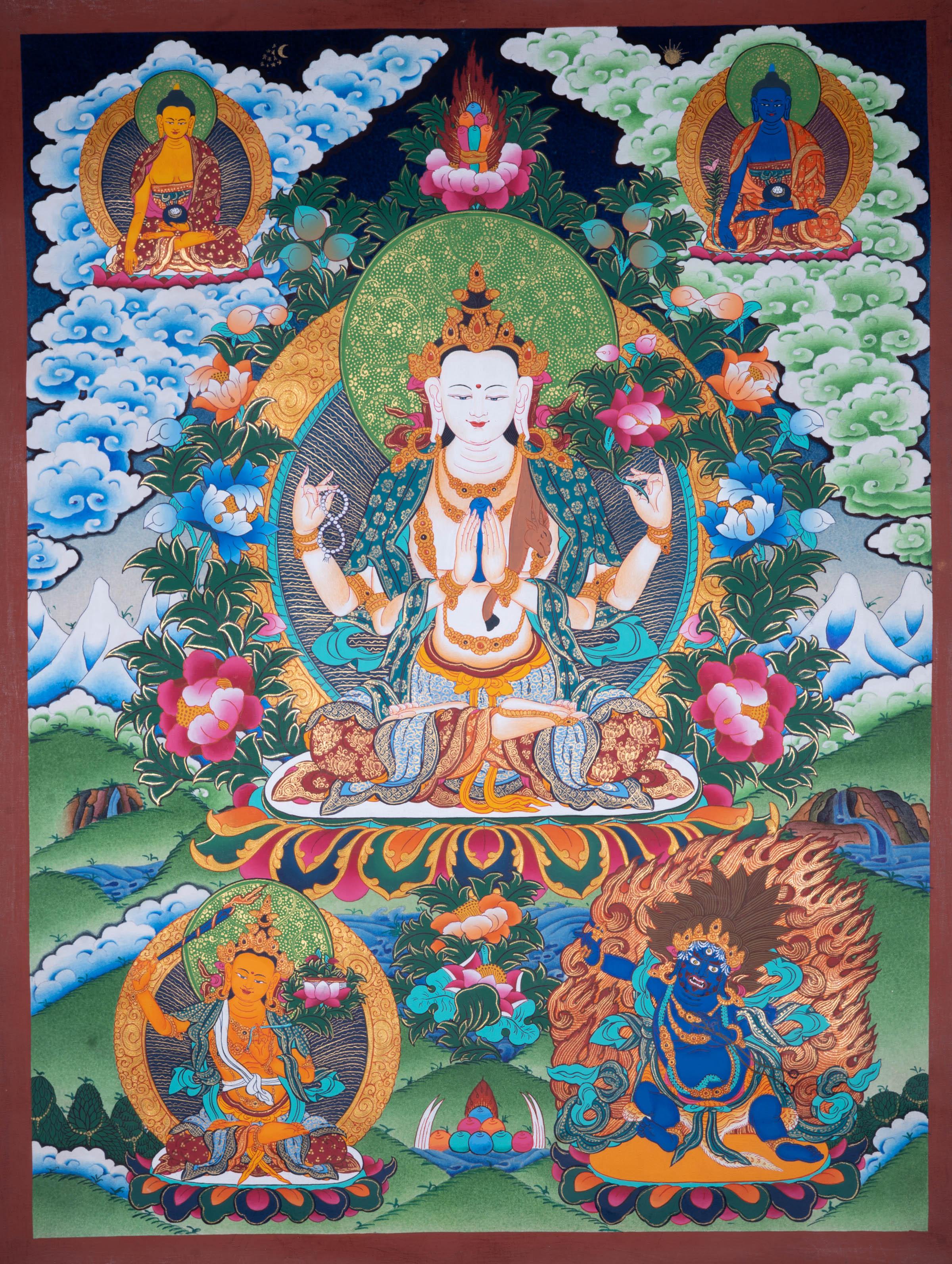
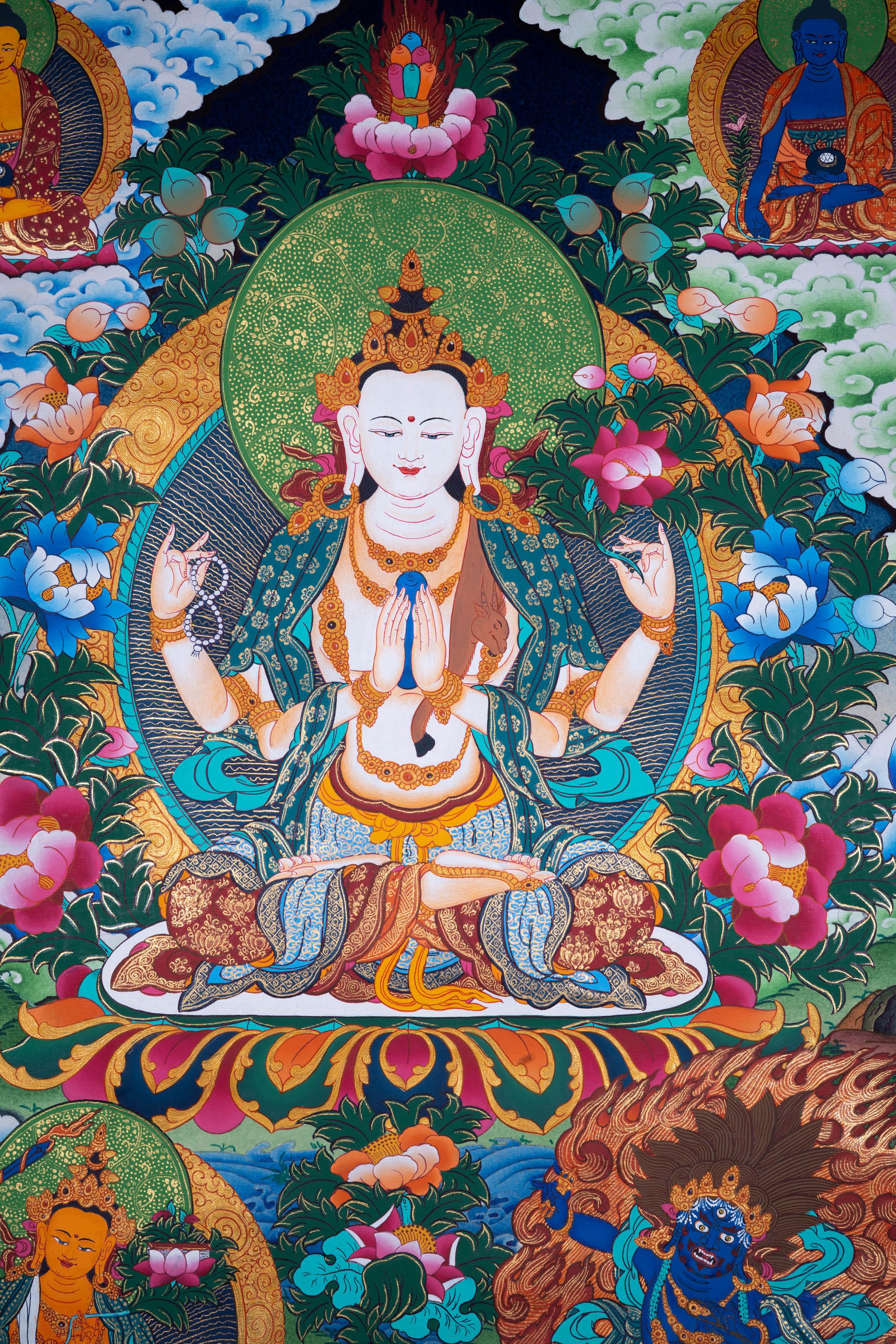
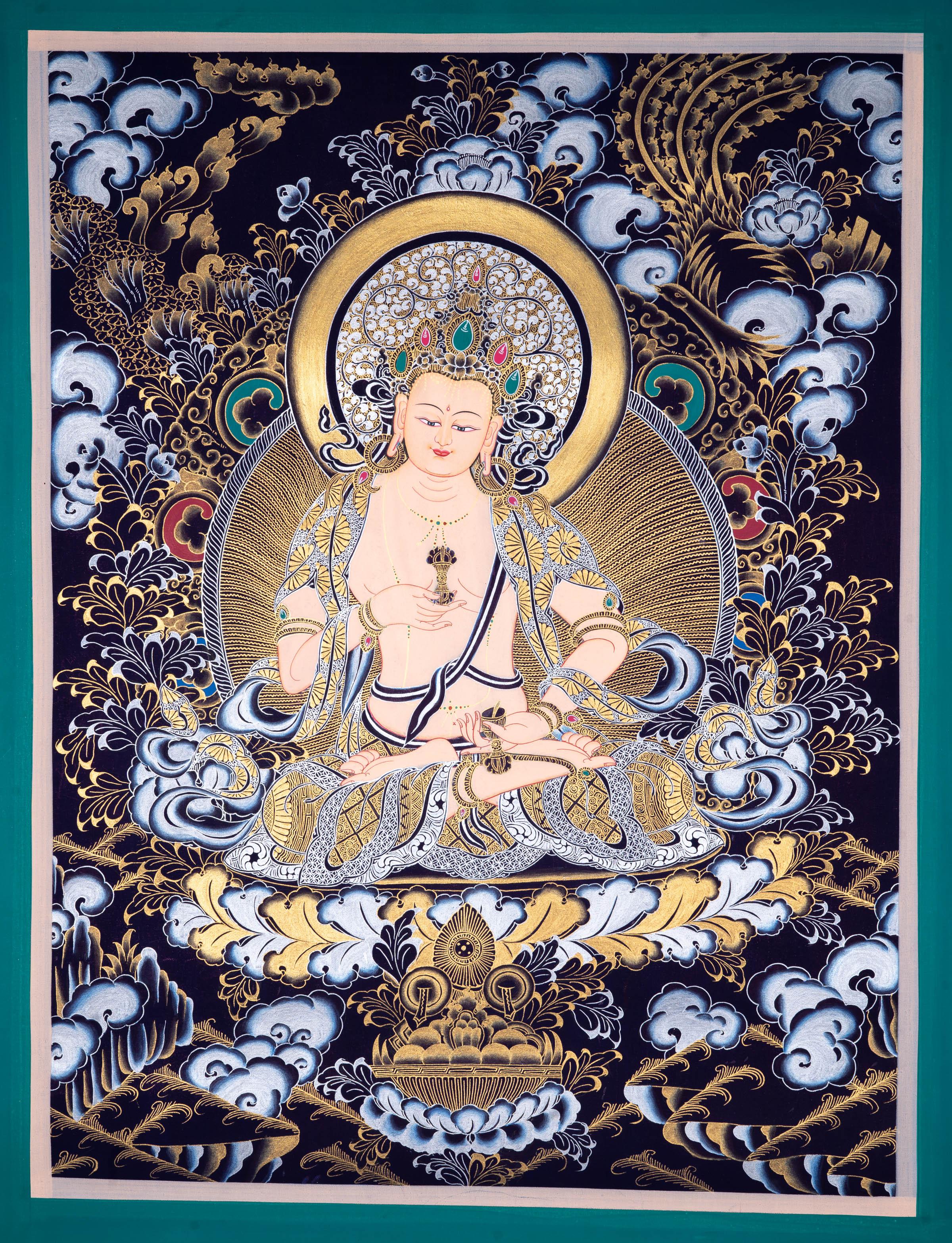
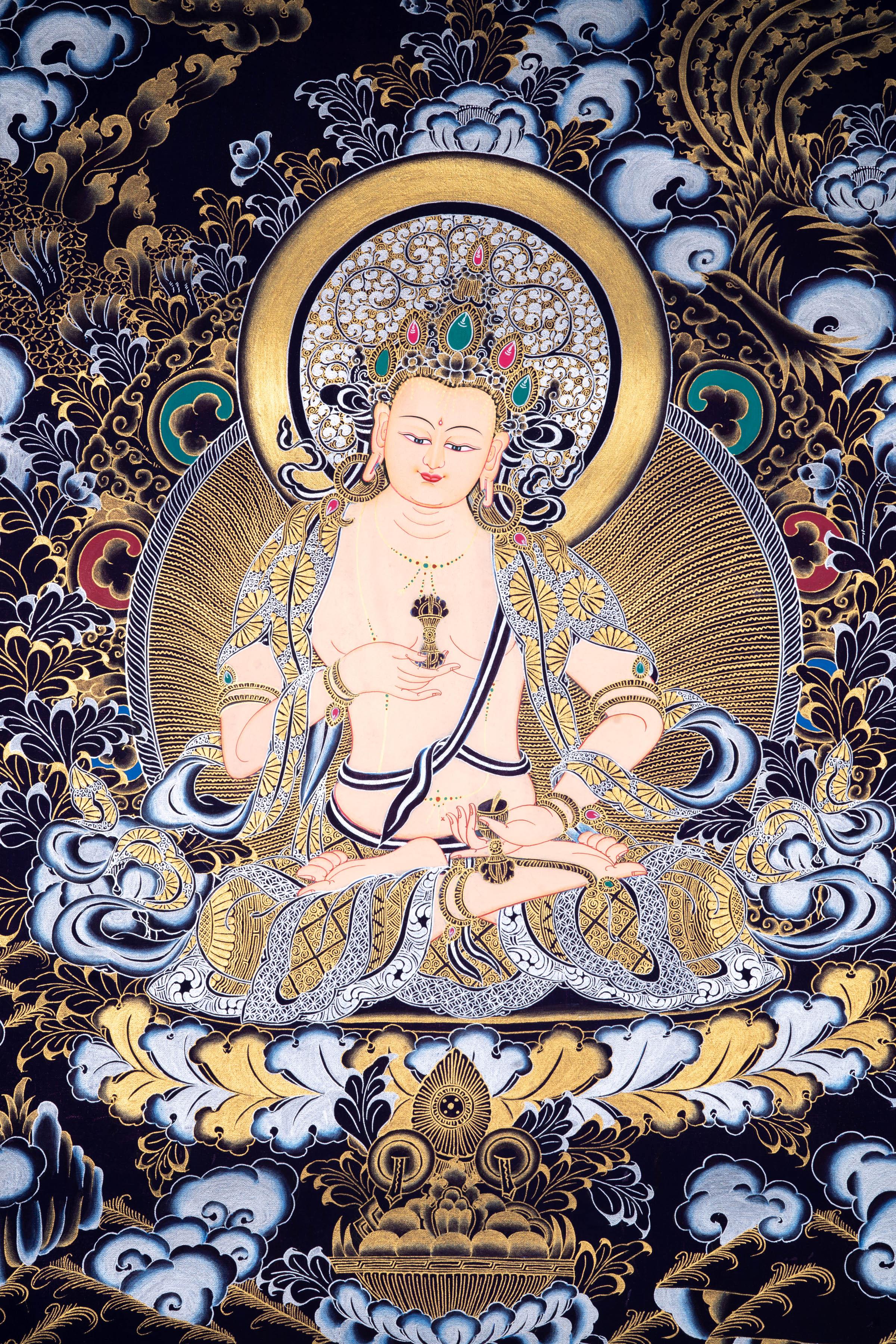
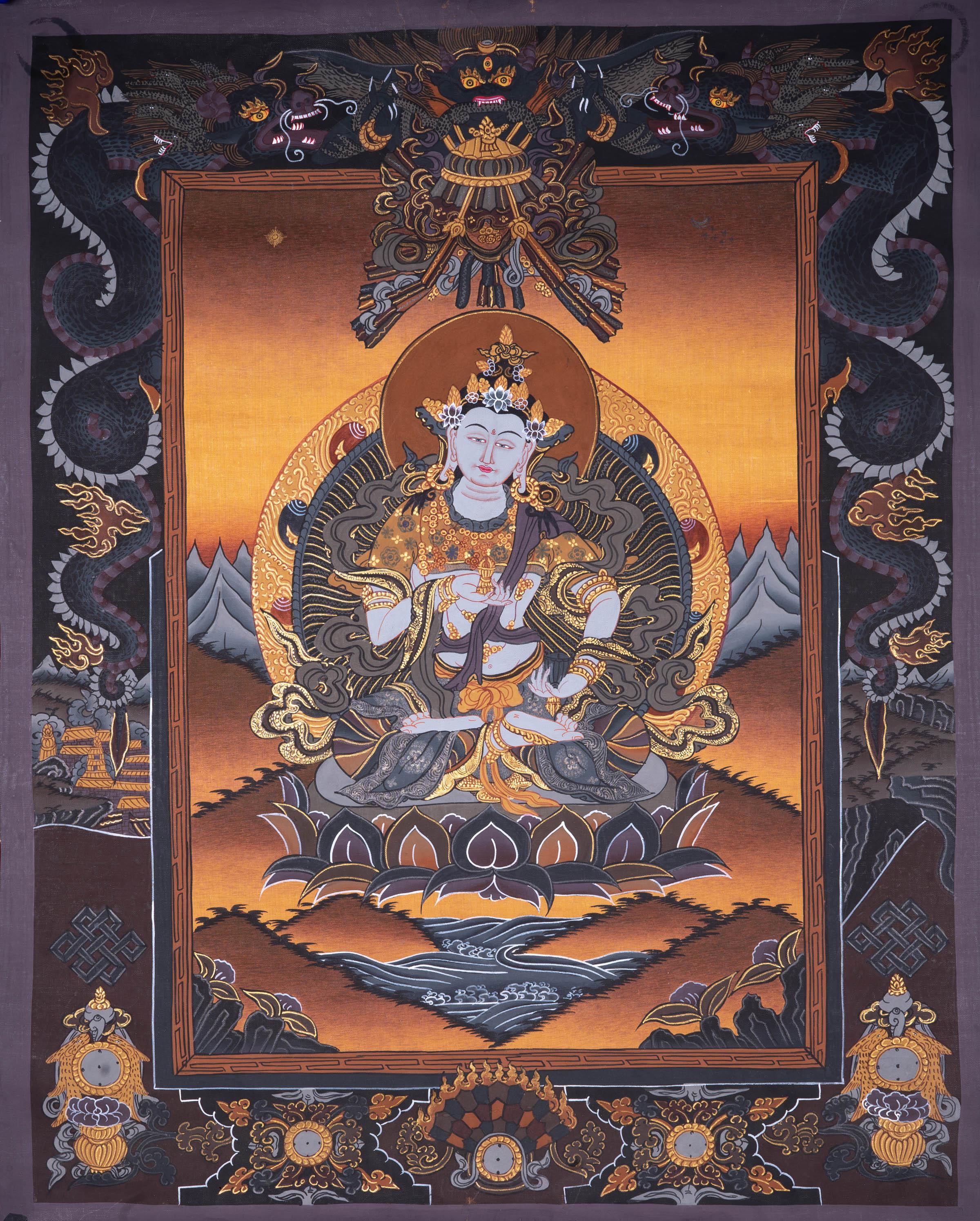
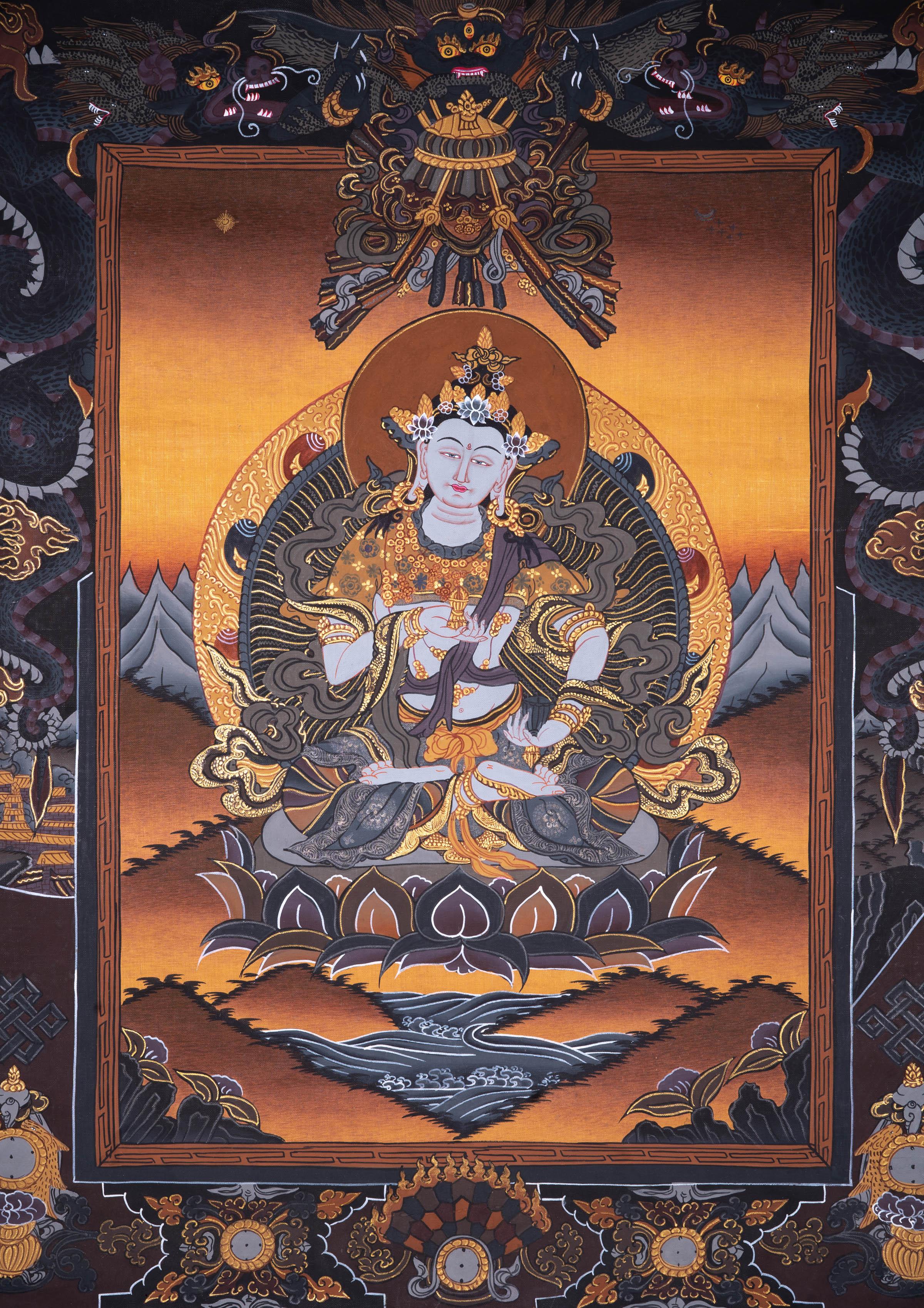
The central figure in this thangka showcases the depiction of White Tara, surrounded by the divine presence of the Pancha Buddha above her and the benevolent energies of Amitayus and Namgyalma below her. This sacred artwork epitomizes compassion, healing, longevity, and spiritual transformation. With its intricate details and sacred symbolism, the thangka invites deep contemplation and connection with the spiritual realm.
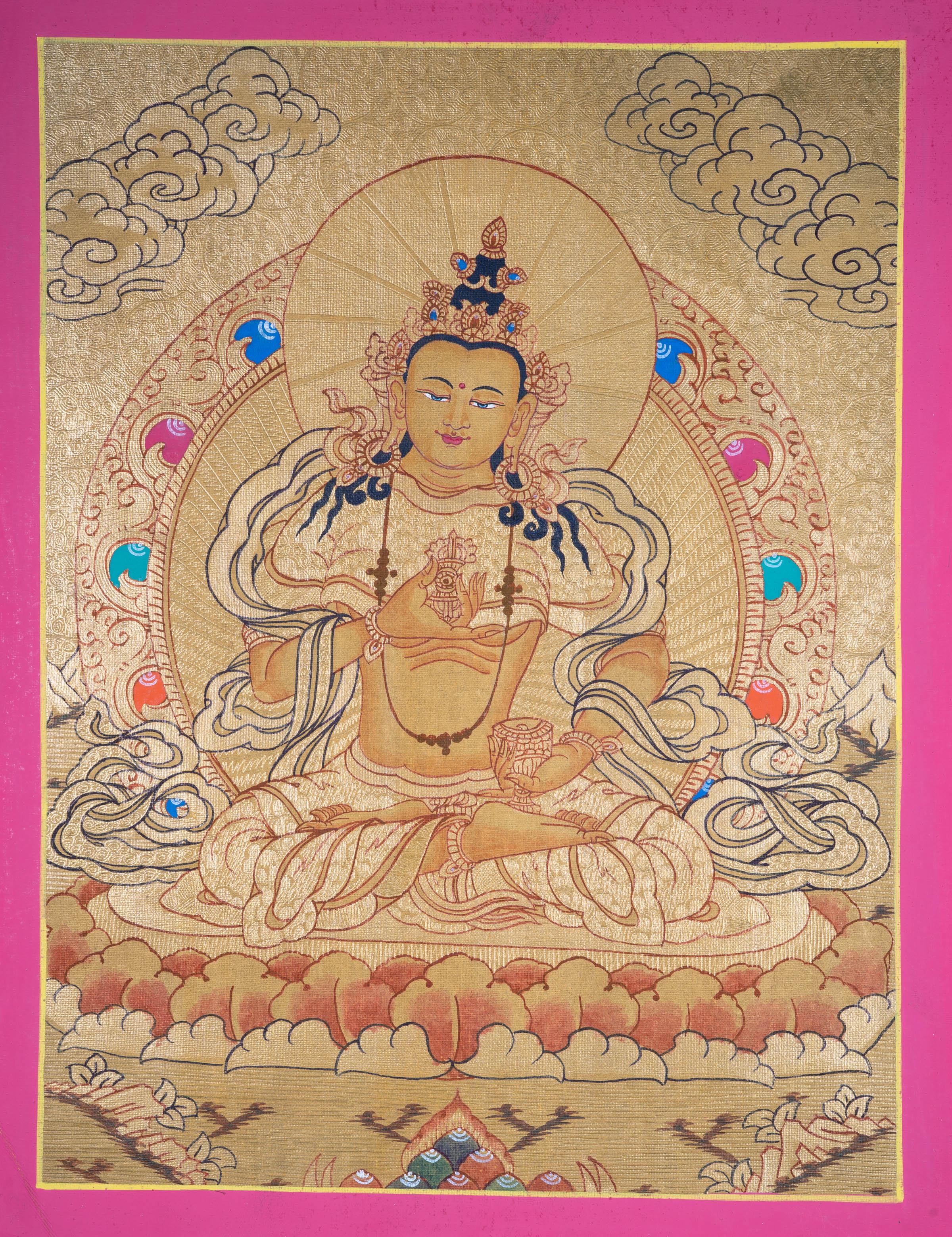
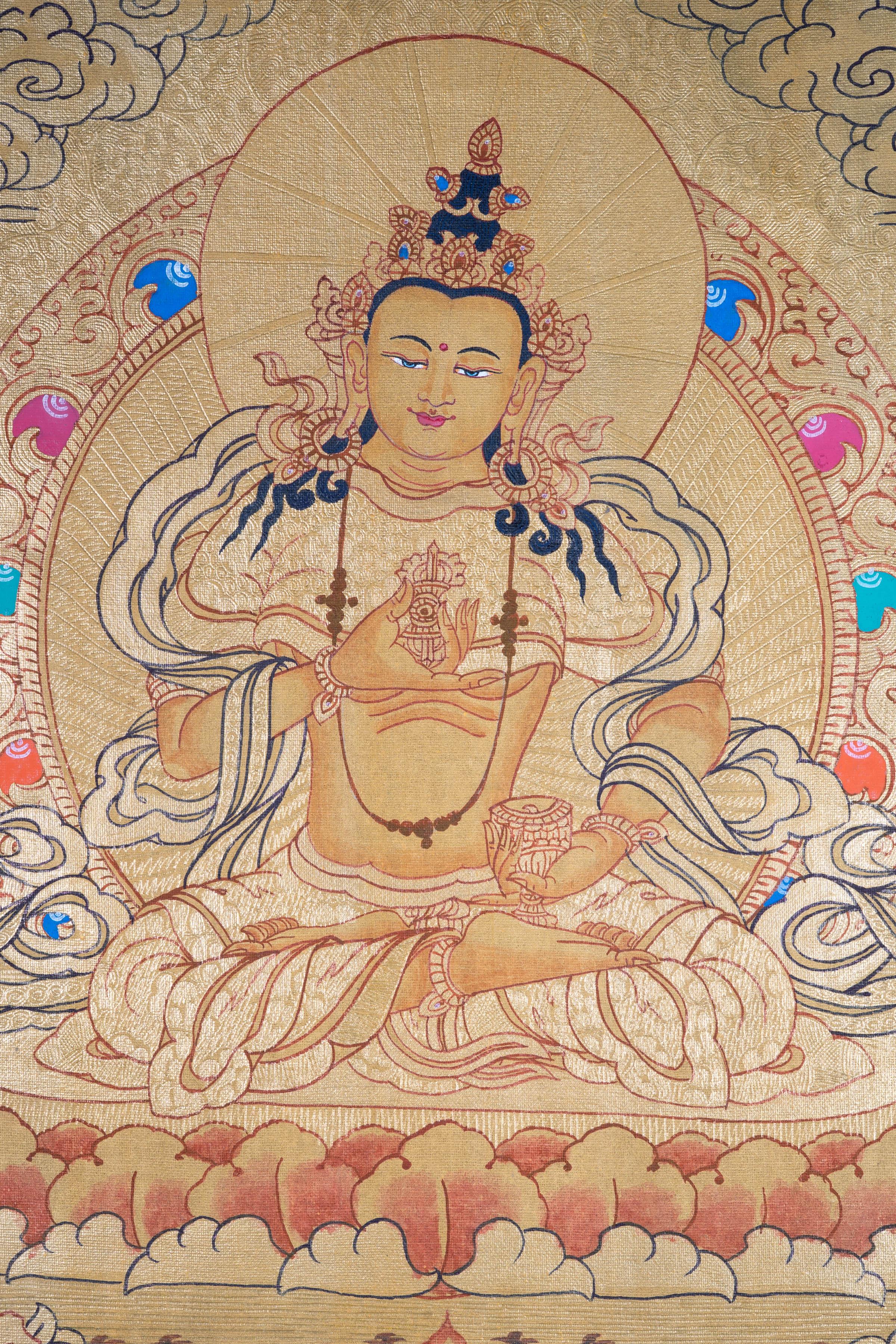
White Tara is a highly respected figure in Tibetan Buddhism, renowned for representing qualities such as compassion, wisdom, and longevity. She is regarded as a female Buddha, with her name "Tara" originating from Sanskrit, meaning "star" or "saviorless." In visual depictions, White Tara is typically portrayed seated on a lotus throne, symbolizing purity, compassion, and enlightenment. Surrounding her are celestial beings, often depicted in vibrant colors, representing spiritual energy and wisdom. The flowing robes, lotus flowers, and mandala patterns incorporated in the artwork carry profound Buddhist significance. This Thangka painting serves as a means to connect with the divine attributes of White Tara, assisting devotees in cultivating compassion, healing, and achieving spiritual liberation.
Original: $400.00
-65%$400.00
$140.00Product Information
Product Information
Shipping & Returns
Shipping & Returns
Description
The central figure in this thangka showcases the depiction of White Tara, surrounded by the divine presence of the Pancha Buddha above her and the benevolent energies of Amitayus and Namgyalma below her. This sacred artwork epitomizes compassion, healing, longevity, and spiritual transformation. With its intricate details and sacred symbolism, the thangka invites deep contemplation and connection with the spiritual realm.
White Tara is a highly respected figure in Tibetan Buddhism, renowned for representing qualities such as compassion, wisdom, and longevity. She is regarded as a female Buddha, with her name "Tara" originating from Sanskrit, meaning "star" or "saviorless." In visual depictions, White Tara is typically portrayed seated on a lotus throne, symbolizing purity, compassion, and enlightenment. Surrounding her are celestial beings, often depicted in vibrant colors, representing spiritual energy and wisdom. The flowing robes, lotus flowers, and mandala patterns incorporated in the artwork carry profound Buddhist significance. This Thangka painting serves as a means to connect with the divine attributes of White Tara, assisting devotees in cultivating compassion, healing, and achieving spiritual liberation.